
AHDA and 30 organizations call for migraine to be a federal women’s health priority
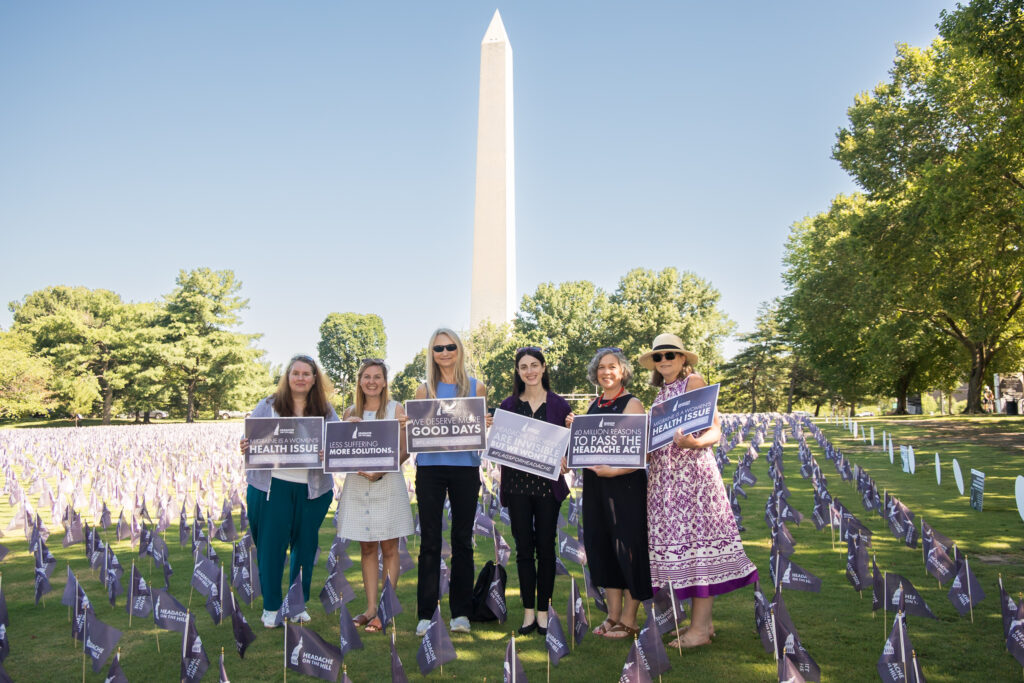
When President Trump signed an executive order on women’s health on October 19, the Alliance for Headache Disorders Advocacy (AHDA) got right to work. The order calls for better research, earlier diagnosis, and improved care for women and girls at every stage of life. We wanted federal leaders to hear early in that process why migraine and other headache disorders belong on the agenda.
What the executive order does
The order directs the National Institutes of Health (NIH) to establish a Women’s Health Division to coordinate research on conditions that affect women, improve how studies capture differences in health outcomes by sex, and help bring research findings into clinical practice. It also establishes a White House Women’s Health Task Force to coordinate work across federal agencies, with a focus on prevention, early diagnosis, and care from childhood through pregnancy, midlife, menopause, and aging. The order specifically identifies chronic pain and neurological disorders as areas that need further research. Read the executive order on the White House website.
That focus on every stage of life matters for people with migraine and other headache disorders. A girl can miss school repeatedly before anyone asks whether she has migraine. A woman who is pregnant or breastfeeding may have limited evidence to guide treatment decisions. And when attacks change during perimenopause, patients and clinicians need research that reflects what happens at that stage of life.
How AHDA brought the coalition together
We drafted a letter with specific recommendations and circulated it to the broad coalition of organizations we’ve built in support of the bipartisan HEADACHE Act. On November 16, AHDA sent the letter to the White House, federal health leaders, and members of the Women’s Health Task Force, with 30 organizations signing alongside us.
We’re grateful to the medical societies, women’s health organizations, headache and facial pain groups, and advocates for people living with chronic pain and conditions that can co-occur with migraine who joined us. These organizations see different parts of the same problem, from how long it can take to get a diagnosis to how hard it can be to find effective care. Their support helped bring those experiences into one letter with concrete requests for federal leaders.
What we asked federal leaders to do
- Name migraine, other headache disorders, and facial pain disorders as priorities. We asked the NIH division to include these conditions in its research agenda and the Task Force to include them in its efforts to improve diagnosis and care.
- Make annual migraine screening part of women’s preventive care. We urged federal leaders to act on the American Headache Society’s recommendation for routine screening, with clinician education and a clear path to evaluation and treatment when screening identifies a patient who needs follow-up.
- Invest in research across the lifespan. We called for research that starts in childhood and follows people through puberty, menstruation, pregnancy, postpartum, breastfeeding, menopause, and aging. We also asked for focused research on migraine associated with menstruation and better evidence to guide treatment during pregnancy and breastfeeding.
- Include patients and caregivers in the work. We asked the Task Force to invite people living with migraine and headache disorders, caregivers, clinicians, and researchers to help shape its priorities through meetings and roundtables.
We also urged the Administration to support the goals of the bipartisan HEADACHE Act and Congress to advance it. The bill would create a national initiative and an advisory council to coordinate federal research, data collection, clinician training, and efforts to improve diagnosis and care. Learn about the HEADACHE Act.
AHDA is nonpartisan. We work with leaders across parties and administrations to improve the lives of people with migraine and other headache disorders. Whenever women’s health is being discussed, we want migraine and headache disorders at the table and the people living with them to have a voice in the decisions that affect their care.